Training and facilitation
Trainings and facilitated conversations built on the Be The Messenger Framework, and shaped for the people in the room: teachers, faculty, officers, city staff, healthcare workers, or a leadership team. Participants leave knowing how each construct shows up in their own work, with strategies they can use the next morning.
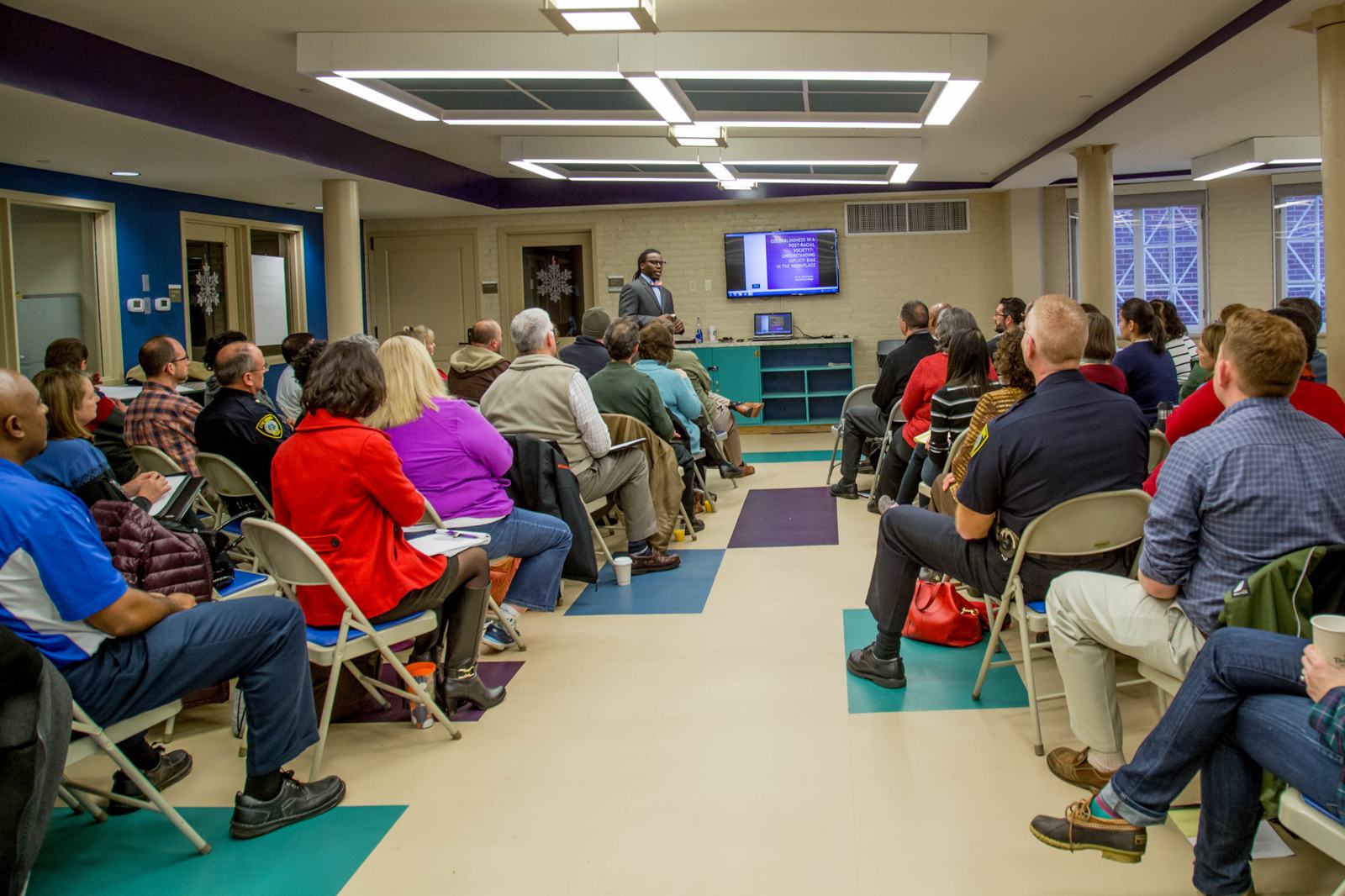
What happens in the room
Everyone defines these four words a little differently. The training starts by asking how you define them, where your definition came from, and what happens when it meets someone else's. From there the work is practical: self-reflection, the environments people come from, the environment the institution creates, and what each person can do differently.
-
Identity
Who you areThe lens through which a person sees themselves, and the lens through which society sees them.
-
Culture
Where you come fromThe beliefs, values, norms, customs, language, and heritage a group uses to navigate the world.
-
Diversity
What connects usValuing differences in perspective, identity, and background. It includes, yet is more than, race, gender, and class.
-
Respect
How you show upTreating yourself and everyone in high regard by valuing difference in identity, culture, and diversity.
"Get uncomfortable to get comfortable."
Dr. Brian Chad Starks The full Framework at bethemessenger.orgThe Messenger Method
Underneath the four constructs runs one process, the same one Dr. Starks lived himself. Every training and every facilitator moves people through it in order.
- Self-Reflection. Facing your story: confronting the wounds that shaped you and understanding your own narrative.
- Self-Awareness. Understanding influence: seeing how your experiences shape the way you lead, teach, relate, and decide.
- Self-Consciousness. Raising perspective: understanding how your choices shape the people, communities, and systems around you.
Formats
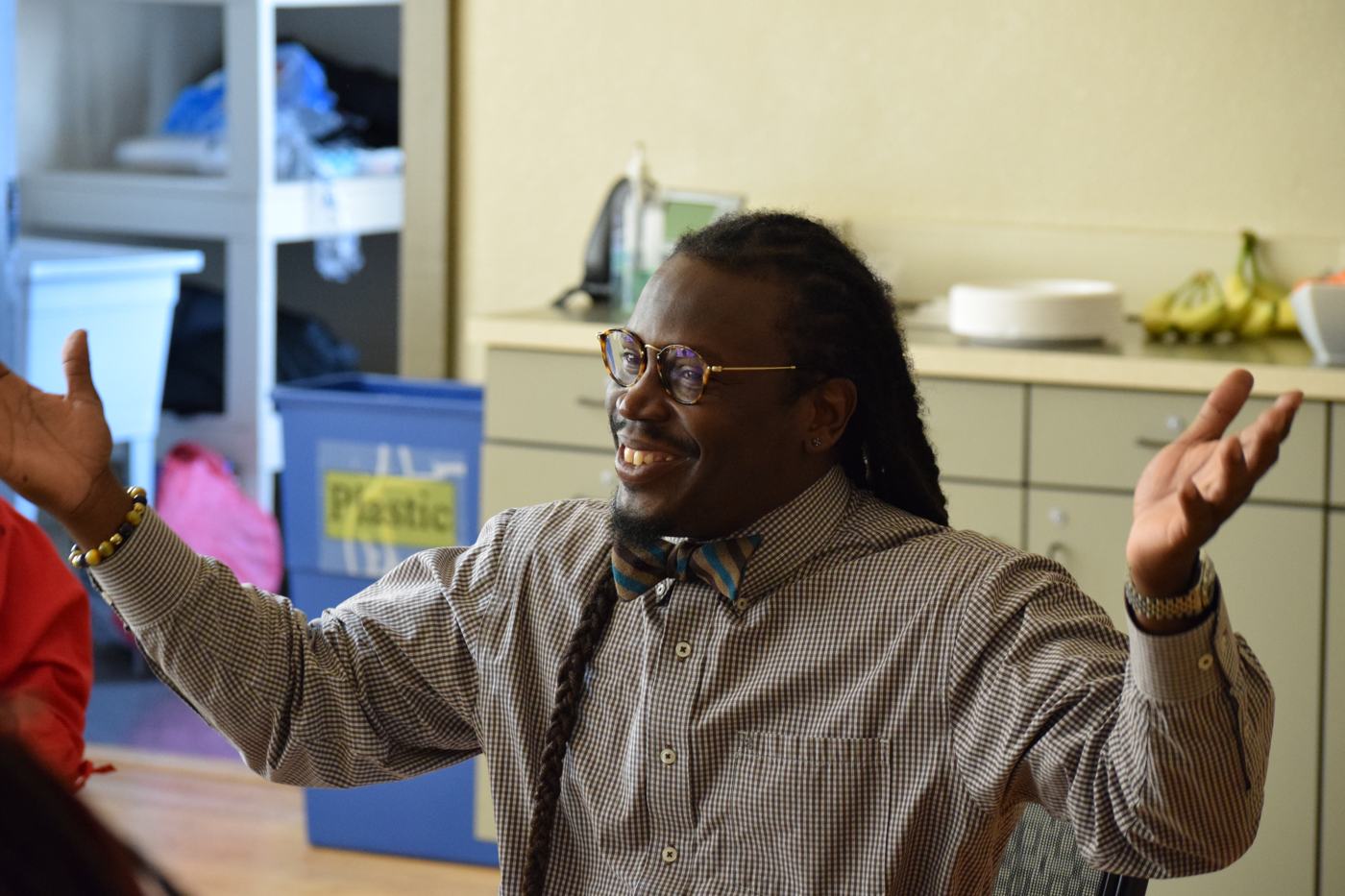
Dr. Starks delivers every format himself. In schools and districts, facilitators he has certified also deliver the full-day training. Either way, the content, the reflections, and the standards are the same.
-
Keynote
To open the conversationFor a convocation, a conference, or an all-staff day. Often the first step toward a training.
-
Full-day training
For a whole staffThe four constructs, the self-reflection, and the strategies, in one day. In schools and districts, this is the Education Edition.
-
Multi-day programs
For teams that want to go furtherOne, three, and five day programs for campuses and STEM programs, and multi-day sequences for leadership teams working on their own data.
-
Facilitated conversations
When the room needs a conversationDialogue sessions for faculty, graduate students, association members, and leadership teams, often paired with a keynote, the way he worked with the University of Connecticut's Department of Molecular and Cell Biology.
-
Facilitator certification
To keep the work goingDistricts that want the training to continue after the visit certify their own staff to deliver it, through Be The Messenger and the Center for Teacher Effectiveness.
Which room are you in?
The application changes. The Framework doesn't. Each page shows what the training looks like in that field and where he has delivered it.
-
K-12 education
Schools and districts, educational leadership, teacher and staff development, and the full-day Education Edition.
-
Higher education
Colleges and universities, faculty and staff development, campus programs, and institutional culture.
-
STEM, science, and research
Institutional culture, participation, access, professional development, research environments, and leadership.
-
Healthcare and human services
Healthcare and hospice organizations, human services, professional relationships, organizational culture, leadership, and institutional responsibility.
-
Government and public sector
Municipal agencies, public institutions, government leadership, organizational accountability, and public service.
-
Criminal justice, public safety, and legal services
Courts, corrections, public safety, law enforcement, legal services, justice organizations, and institutional reform.
-
Corporate and organizational leadership
Workplace culture, leadership development, organizational accountability, professional relationships, and institutional change.
-
Athletics and student development
Athletic departments, coaches, student-athletes, and youth mentoring programs.
-
Civic, nonprofit, and community organizations
Civic organizations, community development, organizational leadership, social impact, and justice-centered initiatives.
-
Don't see your field?
Tell us about your people and what you need them to leave with. Dr. Starks will tell you whether he is the right person for it, and if not, who is.
From the people who brought the training in
"Our organization coordinates a large number of teacher professional development workshops and in my 12 years here, his workshops were among the mostly highly appreciated and evaluated by the participants."
"Dr. Starks is a highly valuable resource to our district as we work to greatly improve outcomes for African American students in our district with regard to academics and discipline. Dr. Starks is straightforward and passionate in his approach in working with us."
"Chad provides motivation and direction, and has professionals talking about social inequality in a constructive way, where the same people were reluctant earlier to even touch these issues."
The Education Edition
The full-day training for schools, with its own curriculum and manual, is the first application of the Framework built for one field. Its home is Be The Messenger.
Bring the training to your institution
Groups of ten or more can request the training through Be The Messenger, delivered by Dr. Starks or by a certified facilitator.
Bring the training to your people
Tell us about your staff, your dates, and what you need them to leave with. If you have a group of ten or more, we can also talk about certifying your own facilitators.